Fanthemy: A Handwritten Font That Elevates Your Craft
I was designing a set of candle labels one afternoon, looking for something that felt personal yet professional. I had tried a few script fonts before, but none quite captured the right balance of elegance and charm. Then I stumbled upon Fanthemy, and it felt like the perfect match. Its soft curves and gentle flourishes brought warmth to every label, making them feel handcrafted rather than mass-produced.
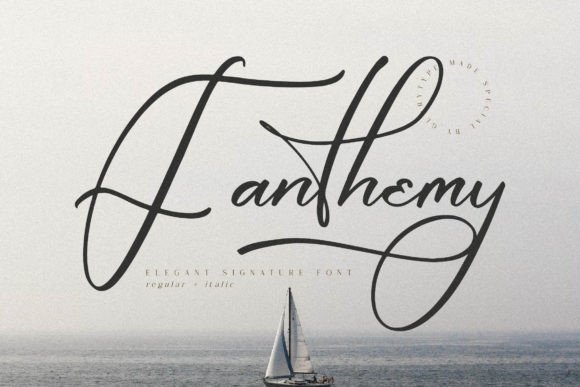
Fanthemy is a handwritten font with a distinct personality. It carries a sense of authenticity and grace, blending modern typography with a touch of nostalgia. The letters have a natural flow, as if they were written by hand with care and intention. This makes it ideal for any project where you want to evoke emotion or add a personal touch.
From Labels to Wall Art: How Fanthemy Breathes Life Into Designs
Since discovering Fanthemy, I've used it across various handmade projects. On candle labels, it gives a soft, inviting feel. When I created a set of birthday invitations, the font made the text look like it was penned by a friend, adding a special charm. For farmhouse-style signs, it worked beautifully with rustic textures and muted colors.
One of my favorite uses has been on printable wall art. The font's delicate style pairs well with minimalist backgrounds, creating a focal point that feels both elegant and approachable. I also use it for boutique packaging, where it helps reinforce the brand's identity with consistent, eye-catching typography.
Fanthemy isn't just for print. When designing digital templates, I find it adds a unique flair to social media graphics, product listings, and even website headers. It’s versatile enough to work in both physical and digital formats, which is a huge plus for anyone selling online or creating digital downloads.
Choosing the Right Style for Your Project
When working with Fanthemy, I consider the context of each design. It shines best in short phrases, names, titles, and decorative wording. For example, it looks stunning on wedding invitations, thank you cards, and logo designs. However, it might not be the best choice for long paragraphs due to its handwritten nature, which can make reading more challenging in extended text.
I often pair Fanthemy with a clean sans serif font for contrast. This combination works especially well in layouts that need both visual interest and readability. Whether I’m designing a greeting card or a planner page, this font pairing helps maintain balance without sacrificing style.
Before using Fanthemy on any commercial project, I always check the included styles, alternates, ligatures, swashes, weights, and file formats. It’s important to ensure the font supports the languages I'm using and that I have the proper commercial license for the type of product I'm creating.
Designing with Fanthemy: Tips and Tricks
When preparing mockups or testing stickers, I pay close attention to how the font looks at different sizes. Fanthemy works beautifully on small stickers, product tags, and labels, but I sometimes adjust the spacing or add subtle outlines to enhance legibility when printed on dark backgrounds.
For cutting machines like Cricut or Silhouette, I recommend using high-resolution files and ensuring the font paths are properly converted. This helps prevent any issues during the cutting process, especially when working with intricate details or thin strokes.
I also test Fanthemy on different materials—paper, vinyl, fabric—to see how it performs. On fabric, for example, I sometimes use a slightly bolder weight or apply a stabilizer to ensure the text remains crisp after heat transfer.
When creating seasonal products, like holiday tags or festive greeting cards, I love how Fanthemy brings a warm, personal touch to the design. It feels like a handwritten message from someone who cares, which is exactly what I want to convey through my shop.
Whether I'm working on digital printables, product packaging, or shop branding, Fanthemy consistently delivers a sense of charm and elegance that elevates the overall presentation. It’s become an essential tool in my creative toolkit, helping me bring ideas to life with a little extra magic.